
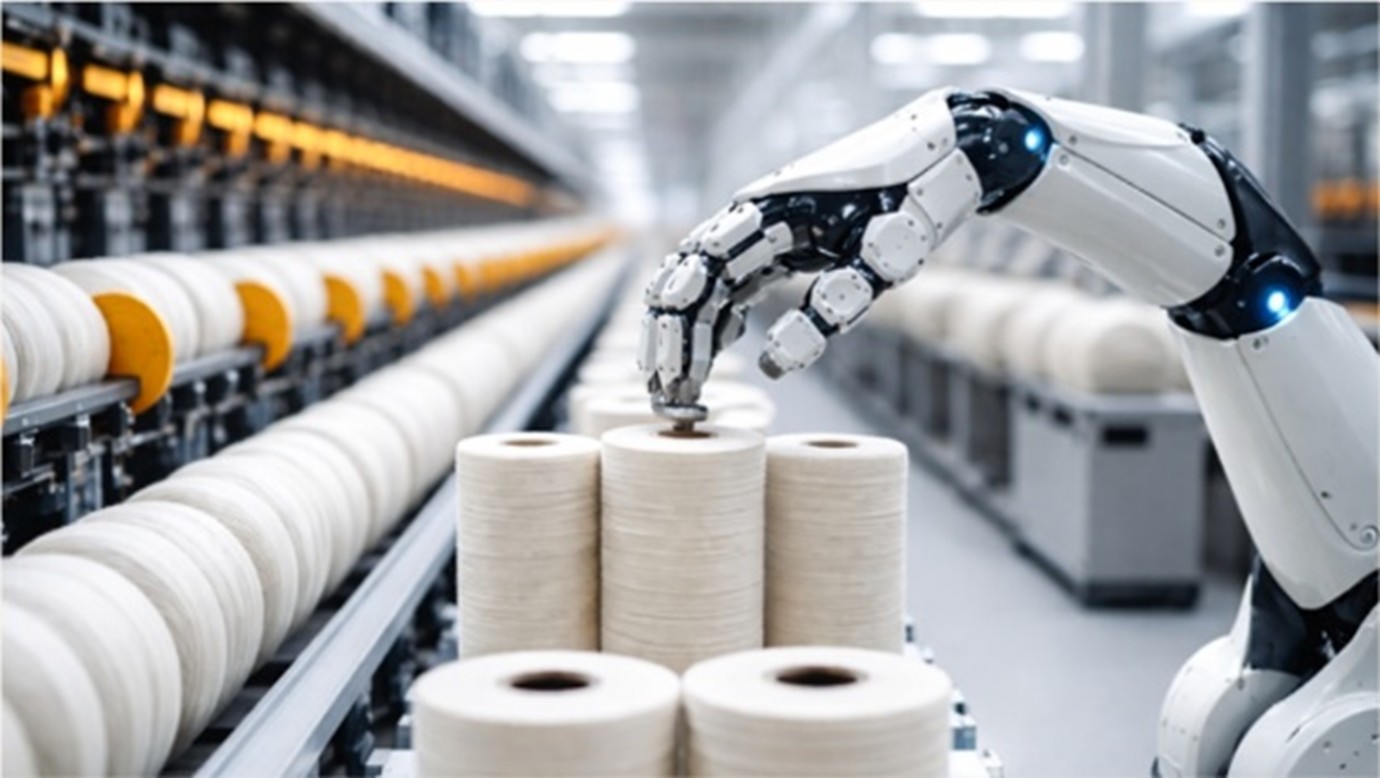
Automation in textiles has been underway for decades. Spinning, weaving, dyeing, finishing. Machines have taken on more of each, steadily. What is changing now is the intelligence on top.
AI in a textile operation is specific. Demand planning that reads market signals faster than a planning team. Quality inspection at the speed of production. Energy management that adjusts in real time. Scheduling that responds automatically when a variable shifts.
These tools are running today. The organisations building them into standard practice are pulling ahead. The gap between them and those still treating digital adoption as a future project is growing.
Digital systems bring visibility, precision and predictability into manufacturing operations.
What RSWM Is Building
At RSWM, AI-driven systems are part of the RSWM 2.0 agenda. Industry 4.0 protocols, AI-powered demand planning and advanced analytics are being built into everyday decisions across manufacturing and commercial functions.
Operational intelligence strengthens the reliability that global buyers depend on.
The company has signed an agreement with Adani Energy Solutions for the supply of 60 MW of renewable energy. As renewable energy becomes a larger share of the operational mix, optimising it across multiple plants becomes a systems-level challenge. AI-driven energy management addresses that challenge directly.
Sustainability is integral to how we are reimagining textile manufacturing. Through our partnership with GreenStitch and the deployment of its AI-powered Sustainability Intelligence Platform, we are embedding enterprise-wide carbon accounting, product-level Life Cycle Assessments, and automated BRSR-aligned ESG reporting into our daily operations. This data-driven approach strengthens transparency, sharpens decision-making, and drives measurable environmental impact. The industry increasingly recognises such technologies as critical enablers of responsible, compliant, and future-ready growth.
The operational objective is clear: reduce variability, improve predictability, operate at scale. Speed and agility are not aspirations at RSWM. They are design requirements.
Why Consistency Is the Product
A buyer sourcing millions of metres of fabric needs quality that holds steady across every shipment. The question a buyer asks, month after month, year after year, is: will it be the same? Consistent delivery is the answer that builds the relationship.
That consistency, at scale, depends on systems running behind every production decision. Systems that do not tire, do not vary and do not forget what the standard is.
The Structural Advantage
The shift to AI-driven manufacturing changes the reliability of the process that produces the product. In a market where margins run on precision and buyer trust is built over years of consistent delivery, that reliability is the business.
RSWM set foot on this journey at the start of 2025. The investments are in place. The systems are being built. The organisations that build the intelligent mill today are the ones that define the standard tomorrow.